
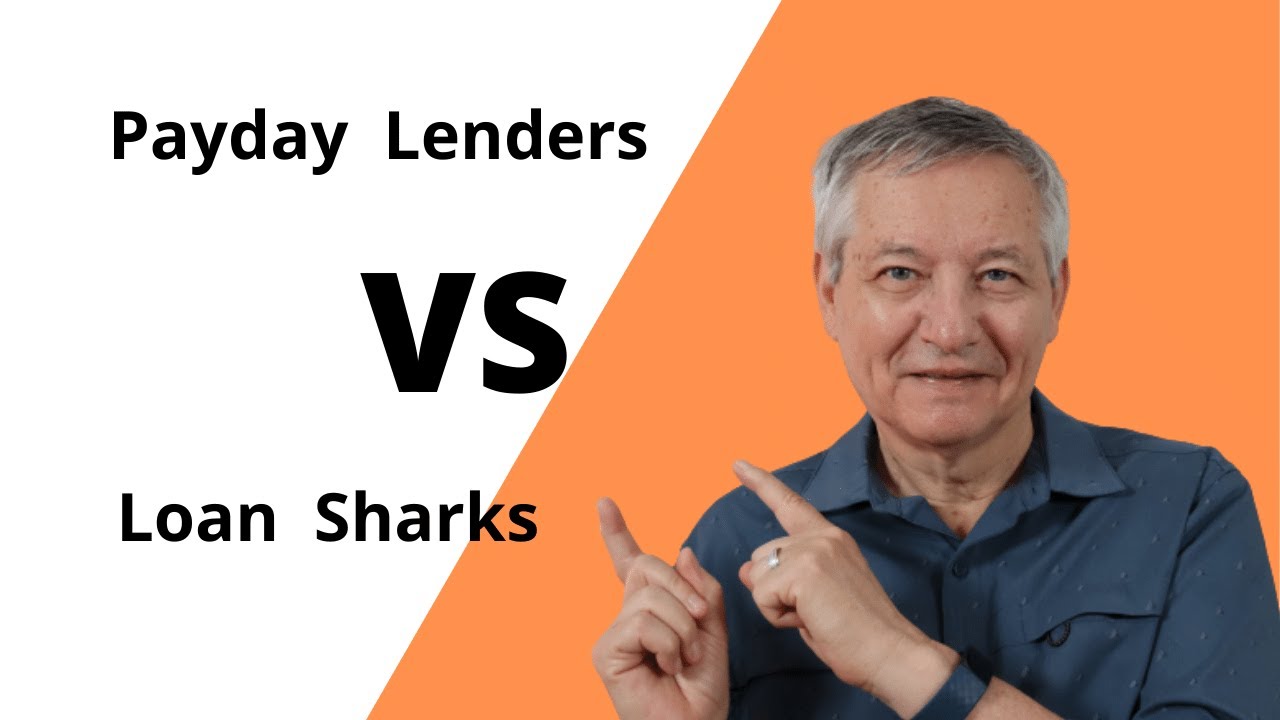
Payday lending consultant Preston Watson, speaking on Mark's channel, outlines pros and cons of Canada's payday loan industry and argues that consumer debt and weak financial literacy are the root cause of so many payday outlets.
Transcript
My name is Preston Watson. I am the founder and president of Watson Capital and Consulting. Within Watson Capital we do a lot of consulting for existing payday lenders in the provinces of Ontario and British Columbia, and we also help those who are looking to enter the payday loan market and who are new to the industry in general.
The pros of payday lending
When you look at any business or industry in Canada, there are always going to be pros and cons. In the payday loan industry, there are three pros that come to mind. The first, obviously, is that payday lenders can provide cash quickly and easily to consumers when they need it most. Somebody who's stuck on the side of the road with a broken-down car can simply borrow from a payday lender at any hour of the day and receive funds in their account almost instantly.
The borrowing process is very simple. The consumer can log on to the lender's website, apply for a loan within two minutes and receive funds in as little as 10 to 15 minutes. By going into a brick-and-mortar store, there's usually not a lot of lineup, so they can apply for a loan within five minutes and walk out with cash instantly. At the same time, the payday loan business offers, I would say, a custom-tailored customer experience. The consumer can walk into any store, and there's a good chance that either the owner of the pawn shop or the branch manager of the larger store already knows who the client is and can anticipate their needs, so they can provide better service than the consumer might find elsewhere.
The cons
When we look at the payday loan industry, there are obviously cons as well. As an active lender, you would probably be surprised to hear me talk about the cons of the industry, but there are three that come to mind. The first, obviously, is the high cost of borrowing. It's no secret that payday loans are expensive. Even when the cost is communicated to consumers upon their application, they are still okay with the rate itself. There is a small percentage of consumers who do not understand the rate at all, but the majority understand what they are borrowing and how much it will cost them. Compared to other credit products that may be available, although not necessarily accessible to them, payday loans are expensive. They are an absolute last resort when it comes to borrowing money, period.
Secondly, like any profession or industry, there are always going to be bad actors, and the payday loan business is no exception. At the same time, the business has a negative connotation that we are loan sharks, which is not true. Payday lenders, for example, are not allowed to advertise on Facebook or Google. We're prohibited by the terms and conditions of those advertising platforms. We are not at the colleges, like credit card companies, trying to entice people to sign up. We're not in grocery stores handing out bags of cookies to people who fill out a credit application. Our service is well known to consumers, and if they need it, they know we're there for them. Unfortunately, the industry has such a bad reputation that even the friends and family of lenders I know see them as loan sharks, which is simply not true. We are there to fill a gap in the lending market where consumers have no alternative for a micro loan, and that's why they turn to us.
The third con of the industry, I would say, is the handling of accounts receivable management. Some lenders, and again not all, don't follow the regulations set by the provinces on the number of calls that can be made to an individual, or the language and tone being used, which ultimately is unnecessary. Lenders need to make sure they maintain their ethical guideposts, and if they don't have them, it's a matter of looking inside and finding them, and ultimately treating the customer like a friend. If you lend a friend $200 and they don't pay you back as they agreed they would, what should you do?
Why are there so many payday loan stores?
In Canada there are a number of cities that are restricting or capping the number of stores allowed to operate within their territory, and I think we're going about this the wrong way. We need to ask ourselves why payday loan stores are popping up everywhere, and how we can reduce their number. In any business, you identify the root cause and you fix it. The root cause in this case is debt: the amount of debt that consumers find themselves in, largely with credit cards, lines of credit and car loans. They're borrowing far more than they should, given their income, and the government has done nothing to limit that. A payday loan of $200, or two payday loans of $300, is a drop in the bucket compared to everything else that has been poured in.
Financial literacy
So we need to look at what is being done to educate consumers so that they do not fall into the debt trap in the beginning. We know that financial literacy is part of the high school curriculum here in Ontario, for example. I don't know what is actually being taught in this regard, but I know budgeting is part of it, and I hope that is being done. At colleges, students who don't have money are being enticed to fill out credit applications to get a credit card, for example, which they don't need.
When you look at consumers who are already in debt, I can see, from reviewing the banking history of thousands of applicants over the years, that they're spending money on things they shouldn't: luxuries like designer clothing, dining out all the time, alcohol, cannabis, gambling or betting. These are just unnecessary things. Why are they doing this? That being said, not all consumers who are in debt fall into this category. There is a percentage whose life circumstances have put them in a position where they simply can't afford things anymore, but that's not normally the case. It's usually financial mismanagement.
What we need to see is a change in financial literacy across the country. We have the FCAC in place, but as someone who actively searches out and reads and researches credit, debt and collections in Canada, I rarely see anything from them. I don't know if they're targeting the correct demographic, or if their message is even being heard, or if it's being put out in a format that will be heard by their targeted audience. There are a lot of fingers being pointed, whether it be lenders pointing at someone else, or trustees, or government, or consumers. The bottom line is that there's a lack of financial literacy among consumers in Canada, and as a result debt is ballooning across this country.
Someone has to take charge. Someone has to do something to fix the root cause. Otherwise, all we're going to continue to do is put band-aid solutions on things where a band-aid simply won't do. We need stitches. We need to solve the problem and fix it once and for all.